
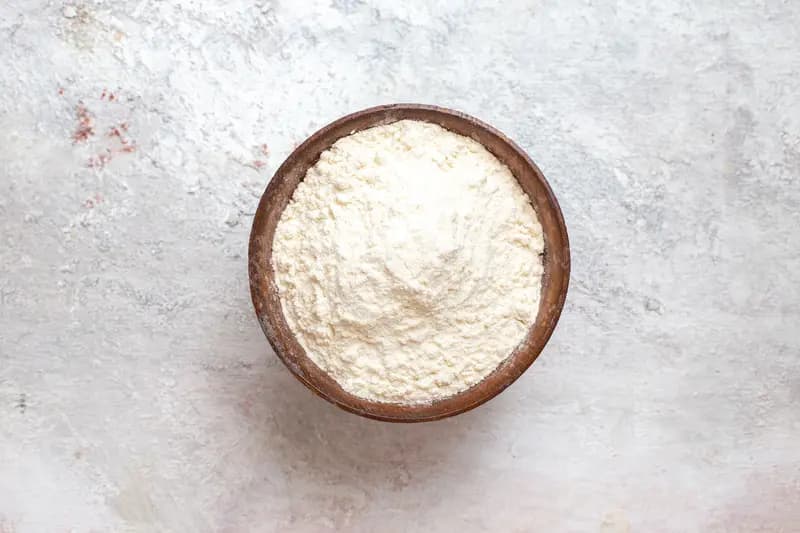
Locust Bean Gum
- IUPAC Name
- locust bean galactomannan
- Molecular Formula
- Galactomannan polymer (1:4 ratio)
- Synonyms & Trade Names
- Locust bean gum; Carob bean gum; LBG; E410
- Purity / Assay (%)
- 75% galactomannan min
- Grade / Quality Level
- Food Grade
- Physical Form
- Solid
Categories
Technical Document
Brief Overview
Locust bean gum has been used as a food additive with wide applications such as a stabilizer, thickener, and gelling agent. This substance is generally found in dairy-based frozen products, such as jellies, ice cream, and cheese. Locust bean gum can also be used in baking products to provide a better texture, softer, and longer shelf life due to its water-holding properties. Enough dietary intake of locust bean gum can also help lower blood glucose and decrease cholesterol levels. The physical properties of this substance are white powder and insoluble in organic solvents.
Manufacturing Process
The manufacturing process started by extracting the seed from the carob fruit pulp. The seed was then heated to separate the germs using sulfuric acid as the solvent. The next step was to treat the seeds with the thermal-mechanical method. This process involved a rotating furnace to remove the seed coat and obtain the endosperm. The final step was to grind the endosperm to form a locust bean gum powder.