Introduction: Why ISP Is Gaining Ground in Indonesia
Indonesia’s food industry is entering a new phase of protein-driven innovation. Consumers are becoming increasingly interested in products that offer higher protein content, convenient nutrition, healthier formulations, and alternative sources of protein, while food manufacturers are simultaneously looking for ingredients that can improve texture, water retention, emulsification, nutritional value, and production efficiency. This combination is creating an increasingly attractive market for Isolated Soy Protein (ISP), also commonly called Soy Protein Isolate (SPI).
Soy Protein Isolate is one of the highest-purity commercially available soy protein ingredients, typically containing around 90% or more protein on a moisture-free basis. Unlike soy flour or many soy concentrates, ISP is highly refined, with much of the fat and non-protein components removed. This produces a relatively neutral-tasting, functional protein ingredient that can be incorporated into a wide variety of food and beverage formulations.
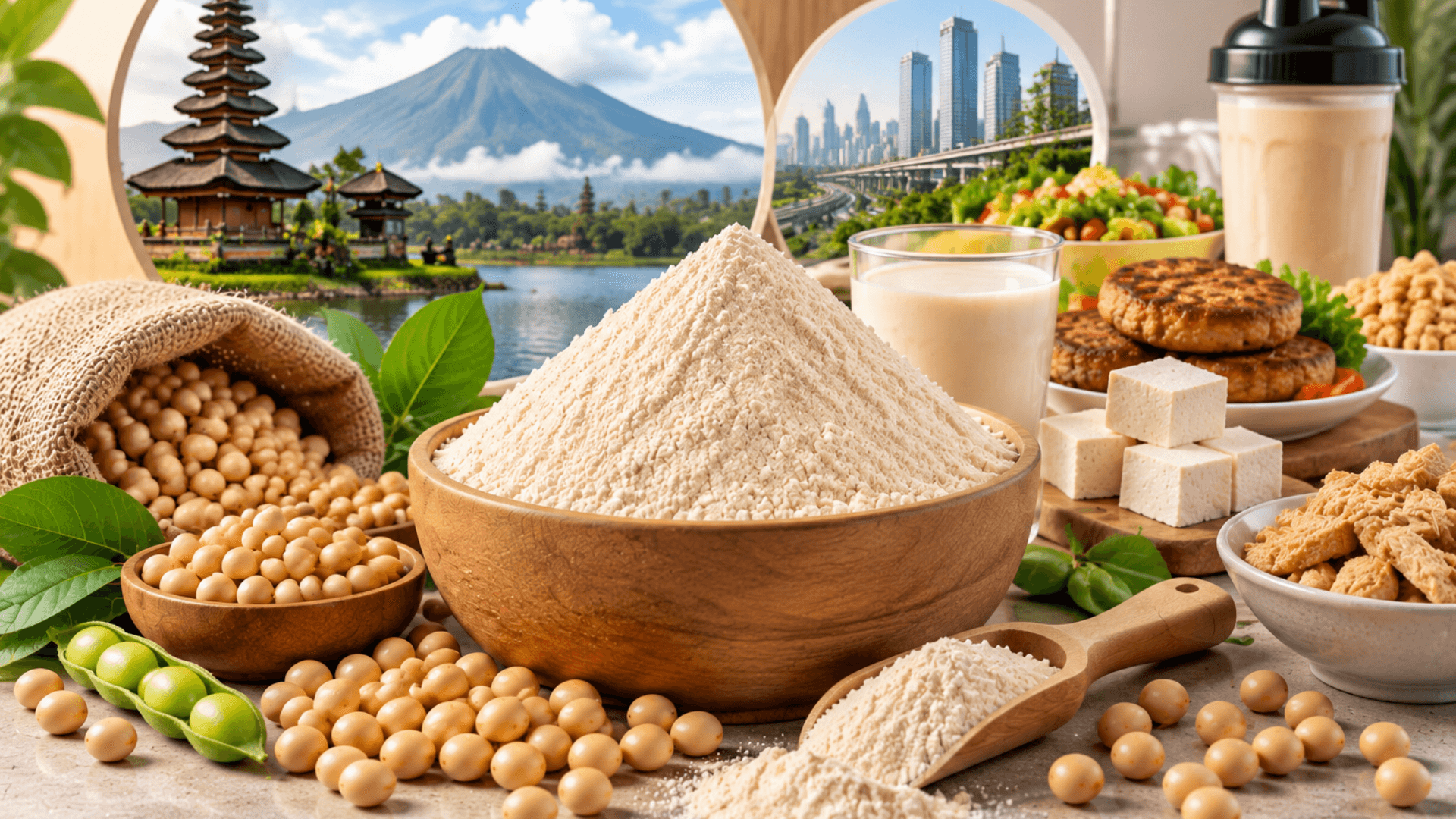
Its commercial importance comes from the fact that ISP provides both nutrition and functionality. In processed meat, it can contribute to water retention, emulsification, binding, and texture. In plant-based meat, it can help build structure and protein density. In beverages, it can provide protein enrichment and contribute to mouthfeel and stability. In bakery products, it can support moisture retention and nutritional fortification. These characteristics make ISP particularly valuable to industrial food manufacturers.
The opportunity is significant because Indonesia has a large food-processing industry that remains highly dependent on imported ingredients. The U.S. Department of Agriculture estimates Indonesia’s food-processing industry at approximately US$101 billion in 2026, with imported ingredients continuing to play an important role in supplying manufacturers.
At the same time, Indonesia’s broader plant-protein market is expanding rapidly. One market study estimates that Indonesia’s plant-protein market reached approximately US$192 million in 2024 and could reach around US$249 million in 2025, with a projected CAGR of approximately 24.9% between 2025 and 2029. Another market analysis estimates Indonesia’s broader soy and dairy protein ingredients market at US$2.43 billion in 2022 and projects it to reach approximately US$4.00 billion by 2030, representing a 6.5% CAGR.
These figures encompass broader protein categories rather than ISP alone, but they illustrate the structural opportunity. As Indonesian manufacturers develop more protein-enriched, plant-based, functional, and convenience-oriented products, demand for highly functional protein ingredients such as ISP is positioned to grow.
What Is Isolated Soy Protein?
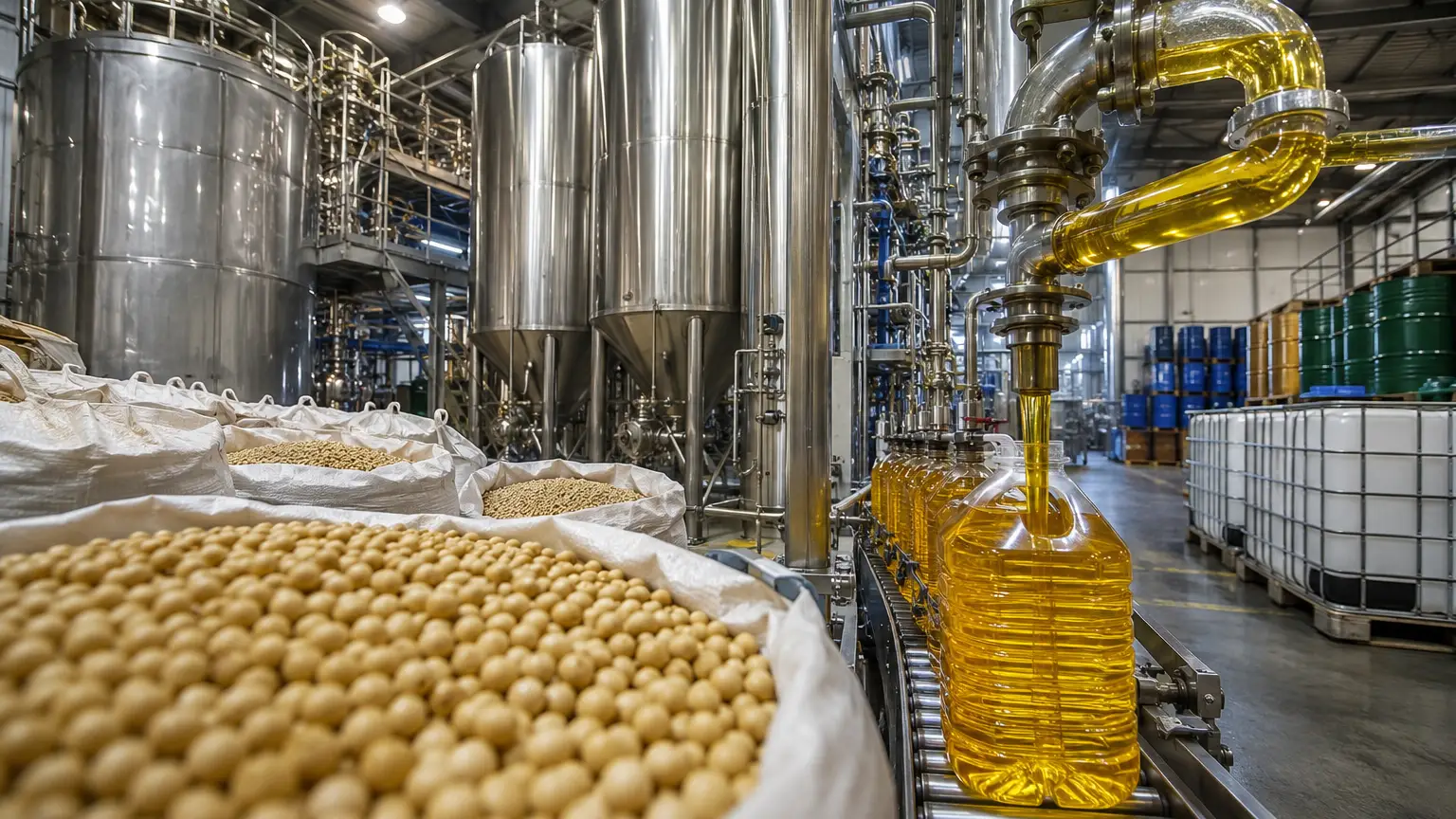
Soy Protein Isolate is produced by processing soybeans to remove most of their non-protein components and concentrate the protein fraction. The resulting powder generally contains at least 90% protein on a moisture-free basis and has a relatively neutral flavor compared with less-refined soy ingredients.
The high protein concentration is only one reason manufacturers choose ISP. Its functionality is equally important. Depending on the grade and manufacturing process, ISP can provide strong water-holding capacity, emulsification, gelation, binding, dispersion, and texturization properties.
These characteristics allow manufacturers to use ISP for purposes beyond protein fortification. In a sausage formulation, for example, ISP can help bind water and fat while contributing to a stable emulsion. In a plant-based burger, it can provide protein density and help form structure during extrusion or cooking. In a beverage, a suitable grade can increase protein content while maintaining an acceptable mouthfeel.
This versatility is one reason ISP continues to be used across conventional foods as well as emerging plant-based categories. Indonesian food-ingredient suppliers already market ISP for applications including sausages, meatballs, snack foods, meat fillings, and other processed foods.
Why Indonesia Is Becoming an Attractive ISP Market
Indonesia has several characteristics that support the expansion of soy protein ingredients. Its population of more than 280 million creates a large consumer base, while urbanization and the growth of modern food manufacturing continue to increase demand for convenient packaged foods.
USDA estimates that Indonesia’s food-processing sector is worth approximately US$101 billion and relies significantly on imported raw materials and ingredients. Demand for imported food-processing inputs continues to grow, although suppliers benefiting from preferential trade agreements remain important competitors.
The country also has a deep existing relationship with soy. Soybeans are a major imported agricultural commodity, with Indonesia importing approximately 2.68 million metric tons of soybeans worth US$1.40 billion in 2024. The United States supplied approximately 2.38 million metric tons, followed by Canada at around 262,000 metric tons and Argentina at approximately 23,000 metric tons.
However, the soybean trade should not be confused with the ISP market. Large soybean imports primarily support industries such as tofu, tempeh, animal feed, and other soybean processing, whereas ISP represents a higher-value processed protein ingredient. The important connection is that Indonesia already has a strong consumer and industrial familiarity with soy, providing a favorable foundation for more sophisticated soy-protein applications.
USDA’s 2025 food-processing report specifically identified textured soy protein as an ingredient with good sales potential in Indonesia. While textured soy protein and ISP are different products, the inclusion of soy proteins among promising food ingredients demonstrates the broader commercial opportunity for soy-based protein ingredients.
ISP Applications Across Indonesia’s Food Industry
Processed Meat: A Core Application
Processed meat is one of the most established applications for ISP in Indonesia. Sausages, meatballs, nuggets, patties, luncheon meat, and other processed meat products require ingredients that can improve binding, water retention, emulsification, and texture.
ISP can help manufacturers retain moisture and fat within the formulation while contributing to a stable structure. This can improve yield and create a more consistent bite after cooking.
This functionality is especially valuable in emulsified meat products such as sausages. During production, the formulation must maintain a stable distribution of meat, fat, water, and other ingredients. A suitable ISP grade can support the formation of this system while also increasing the protein contribution of the finished product.
The commercial advantage is therefore twofold. Manufacturers gain a functional ingredient that helps processing while also obtaining an additional source of protein.
Plant-Based Meat and Meat Alternatives
The rapid development of plant-based foods is one of the most visible opportunities for ISP. Plant-based burgers, sausages, nuggets, meatballs, and other meat alternatives require proteins that can provide structure and a meat-like eating experience.
ISP is particularly useful because its functional properties can be utilized during processes such as extrusion. Protein molecules can interact and form structured networks that contribute to the fibrous or firm texture expected from meat alternatives.
The Indonesian plant-based food market is expanding, and soy remains an important ingredient source. Mordor Intelligence estimates that soy accounted for approximately 39.56% of Indonesia’s plant-based food market by ingredient source in 2025, while meat substitutes are forecast to grow through 2031.
This creates an important opportunity for ISP suppliers because manufacturers are not simply looking for protein content. They require proteins that can deliver the right texture, bite, moisture retention, and cooking performance.
Plant-Based Milk and Dairy Alternatives
ISP can also be used in soy-based and other plant-based beverages. Its high protein concentration allows manufacturers to increase nutritional value while its functional characteristics can contribute to body, mouthfeel, and emulsion stability.
In ready-to-drink beverages, solubility and dispersion are critical. A protein ingredient that produces sedimentation, grittiness, or poor mouthfeel can create significant product-quality problems. Beverage-grade ISP is therefore typically selected according to its dispersion and processing characteristics.
The opportunity is supported by the broader Indonesian plant-based beverage market. Dairy-alternative beverages represented approximately 37.2% of Indonesia’s plant-based food market revenue in 2025 according to Mordor Intelligence.
For manufacturers, ISP can therefore serve as both a nutritional and functional component in soy beverages, protein drinks, smoothies, powdered beverage mixes, and other fortified products.
Sports Nutrition and Protein Products
The growing interest in protein-focused nutrition creates another application for ISP. Protein powders, shakes, high-protein beverages, snack bars, and nutrition products can use soy protein isolate as a plant-based protein source.
ISP provides a relatively high protein concentration and a complete amino-acid profile, making it attractive for formulations targeting consumers seeking plant-based protein.
Indonesia’s growing fitness and wellness economy further supports this opportunity. Although sports nutrition represents a different market from mainstream food manufacturing, the same ingredient can serve both segments depending on grade, certification, flavor system, and formulation.
For ingredient suppliers, this diversification is commercially valuable because demand does not have to depend exclusively on plant-based meat.
Bakery and Bakery Premixes
Bakery products represent another opportunity for ISP. Bread, cakes, cookies, pastries, nutrition bars, and bakery premixes can incorporate ISP for protein fortification and functional benefits.
Protein can influence dough characteristics, moisture retention, structure, and texture. ISP can therefore help manufacturers develop higher-protein bakery products while contributing to formulation performance.
This is increasingly relevant as food manufacturers respond to consumer interest in functional and fortified foods. Products marketed around higher protein content can use ISP to increase nutritional value without relying exclusively on animal-derived ingredients.
Snacks and Nutrition Bars
ISP can also be used in protein-rich snacks, energy bars, meal-replacement products, and other convenient nutrition formats.
The Indonesian market has a strong convenience-food culture, and protein-enriched snacks can fit into consumers’ increasingly mobile lifestyles. ISP allows manufacturers to increase protein concentration while maintaining a relatively flexible formulation platform.
For snack manufacturers, the choice of ISP grade can affect texture, dispersion, flavor, and processing characteristics, making technical specification an important part of sourcing.
Sauces, Emulsions and Specialty Foods
ISP’s emulsifying and water-binding properties also make it useful in sauces, spreads, dressings, and other specialty food systems.
Although these applications generally use smaller quantities than processed-meat formulations, they demonstrate the versatility of ISP. Its ability to interact with water and fat can help manufacturers create stable formulations with controlled texture and mouthfeel.
This multifunctionality is one of ISP’s strongest commercial advantages compared with protein ingredients that provide nutrition but have limited functional performance.
Indonesia’s ISP Demand Is Part of a Larger Protein Shift
The demand outlook for ISP should be understood within the wider growth of protein ingredients in Indonesia. The country’s plant-protein market has expanded rapidly, with one market study estimating a 32.5% CAGR from 2020 to 2024 and forecasting approximately 24.9% annual growth from 2025 to 2029.
The broader soy and dairy protein ingredients market is also projected to grow from approximately US$2.43 billion in 2022 to US$4.00 billion by 2030, representing a 6.5% CAGR.
These figures should not be interpreted as ISP-specific market values. Rather, they show the expanding ecosystem in which ISP competes and participates.
Several demand drivers are particularly important. Indonesian consumers are increasingly exposed to high-protein products, plant-based alternatives, functional beverages, and convenient nutrition. Food manufacturers are also seeking ingredients that allow them to reformulate conventional products while maintaining familiar textures and eating experiences.
This means ISP has opportunities in both emerging products and established food categories. It does not need to depend solely on consumers switching to vegan products. Its functional properties allow it to remain relevant in conventional processed foods as well.
Where Does Indonesia Import ISP From?
Indonesia is structurally dependent on imported soy protein ingredients, and shipment-level trade data provides direct evidence of ISP entering the Indonesian market.
Under HS 350400, Indonesia imports “peptones and other protein substances and their derivatives,” a broad customs category that includes multiple protein ingredients and is therefore not equivalent to ISP alone. In 2024, Indonesia imported approximately US$38.2 million worth of HS 350400 products from China, equivalent to around 16.9 million kilograms. The United States supplied another US$6.0 million, equivalent to approximately 618,000 kilograms.
The importance of China and the United States becomes even clearer when shipment-level data is examined. Volza records multiple Indonesian imports in 2025 explicitly described as Isolated Soy Protein under HS 35040000 from China. Shipments included 20-ton, 25-ton, 26-ton, 27-ton, 52-ton, and even 104-ton consignments of various ISP grades.
The United States is also a significant source for specialty ISP grades. Shipment records include products such as SUPRO isolated soy protein imported into Indonesia, including a 32,000-kilogram shipment in June 2025 and other food-grade ISP consignments.
The data therefore suggests a two-tier sourcing structure. China is highly competitive in large-volume conventional ISP supply, while U.S. suppliers have a visible role in established branded and specialty grades. Other origins can also participate depending on price, functionality, certification, GMO status, and customer requirements.
Importantly, HS 350400 is a broad classification. It includes collagen, whey-derived proteins, and other protein substances in addition to ISP. Therefore, the total HS 350400 import value should not be presented as Indonesia’s ISP market size. The explicit ISP shipment records provide stronger evidence of actual sourcing origins.
Indonesia’s Regulatory Framework for Importing ISP
Importing food-grade ISP into Indonesia requires coordination across customs, trade, food-safety, and halal regulations.
From a customs perspective, HS 35040000 has historically been used for isolated soy protein imports into Indonesia. Indonesian BPOM documentation itself lists “Isolated Soya Protein” under HS 35040000, providing evidence that this classification has been used for the product in Indonesia.
However, importers should not rely solely on historical classifications. The exact HS code should always be confirmed against the current BTKI and the product's precise characteristics before shipment.
Indonesia's current import framework is governed by Minister of Trade Regulation No. 16 of 2025 concerning Import Policy and Regulation, which remains in force and has subsequently been amended, including by Minister of Trade Regulation No. 18 of 2026. The framework regulates import procedures through systems including OSS and INATRADE, and importers must have an appropriate NIB that functions as the importer identification number.
The importer must then complete customs procedures and provide the required commercial and shipping documents for clearance.
BPOM and Food-Safety Considerations
Because ISP is intended for food manufacturing, food-safety compliance is a major consideration.
Indonesia's BPOM framework includes food categories specifically covering soy-protein products. BPOM's food-category database identifies “Produk Protein Kedelai” under category 06.8.8, while Texturized Vegetable Protein is separately identified within the same broader soy-protein category.
The regulatory treatment of an imported ISP ingredient should therefore be assessed according to its identity, intended use, formulation, and how the Indonesian customer incorporates it into a finished food product.
BPOM Regulation No. 23 of 2023 concerning Processed Food Registration is currently in force and provides the framework for registration of processed foods.
For products entering Indonesia, BPOM Regulation No. 28 of 2023 amended Regulation No. 27 of 2022 concerning the supervision of the entry of drugs and food into Indonesia and remains applicable.
For an ISP supplier, this means that regulatory preparation should include a complete product dossier. Depending on the buyer and intended application, this may include the product specification, Certificate of Analysis, microbiological specifications, heavy-metal information, allergen declaration, GMO status, country-of-origin documentation, manufacturing information, and relevant certificates.
The exact documents required can differ depending on whether the material is imported as an ingredient for industrial food manufacturing or is incorporated into a finished processed food product.
Halal Certification Is Becoming Critical in 2026
Halal compliance is particularly important for ISP because Indonesia's halal requirements extend beyond finished consumer foods to relevant food ingredients and raw materials.
Under the implementation of Indonesia's halal framework, 18 October 2026 is a major milestone for mandatory halal certification covering food and beverage products, raw materials, food additives, and other relevant product categories. BPJPH specifically identifies raw materials and food additives among the categories subject to mandatory halal certification under the applicable framework.
For ISP suppliers, the issue goes beyond the soybean itself. The manufacturing process, processing aids, carriers, and other relevant materials may need to be evaluated to establish halal status.
This is particularly important for suppliers offering conventional, non-GMO, organic, or specialty ISP grades. Indonesian customers increasingly need documentation that allows them to demonstrate compliance throughout their ingredient supply chain.
Having recognized halal certification and transparent production documentation can therefore become a commercial differentiator rather than simply a regulatory requirement.
What Indonesian Buyers Look for in ISP
Indonesian food manufacturers generally evaluate ISP according to a combination of nutritional specifications and functional performance. Protein content is important, but it is only the starting point.
Solubility is critical for beverages and powdered nutrition products. Water-holding capacity is important for meat applications. Gelation and emulsification are important for sausages, meat analogs, and processed foods. Dispersion, flavor, particle size, and viscosity can become important depending on the formulation.
The distinction between grades is therefore commercially significant. Food-grade ISP designed for meat processing may have different functional characteristics from beverage-grade ISP. Specialty grades can be optimized for extrusion, high protein beverages, emulsification, or other specific processing requirements.
Indonesian buyers also increasingly evaluate supply reliability and documentation. Consistent quality, halal certification, GMO status, allergen statements, traceability, and predictable lead times can influence supplier selection just as strongly as the headline price.
Conclusion: ISP and Indonesia’s Next Protein Wave
Soy Protein Isolate is well positioned to benefit from Indonesia's evolving food and beverage industry. Its combination of high protein concentration and strong functional performance makes it relevant across both established and emerging applications.
Processed meat remains an important application because ISP can contribute to water binding, emulsification, yield, and texture. At the same time, plant-based meat, dairy alternatives, functional beverages, sports nutrition, bakery products, snacks, and protein-enriched foods provide additional growth opportunities.
Indonesia's broader plant-protein market is expanding rapidly, while the country's approximately US$101 billion food-processing industry continues to rely heavily on imported ingredients.
Trade data also demonstrates an established import market. China and the United States are visible suppliers of protein substances under HS 350400, while shipment-level records show repeated commercial imports of ISP from both origins into Indonesia.
For suppliers, however, entering Indonesia requires more than competitive pricing. Accurate customs classification, appropriate import documentation, BPOM compliance, product specifications, and halal certification are becoming increasingly important, particularly as Indonesia approaches the October 2026 halal implementation milestone.
Ultimately, ISP's opportunity in Indonesia comes from its ability to bridge nutrition and functionality. It can increase protein content while simultaneously helping manufacturers build texture, retain water, stabilize emulsions, and develop products that meet changing consumer expectations.
As Indonesia's food industry continues to move toward higher-protein, functional, convenient, and plant-based products, Soy Protein Isolate is positioned to become an increasingly important ingredient within the country's food manufacturing supply chain.
Meet Us at Fi Asia Indonesia 2026
Tradeasia International is ready to support Indonesian food manufacturers, distributors, and sourcing partners looking for reliable Soy Protein Isolate and other functional food ingredients. Whether you are developing processed meat, plant-based meat, protein beverages, bakery products, dairy alternatives, sports nutrition, or other protein-enriched foods, our team can discuss suitable ISP grades, specifications, sourcing options, and application requirements.
Tradeasia International will be exhibiting at Fi Asia Indonesia 2026 at JIExpo Kemayoran, Jakarta. Visit us at Booth C3L38, Hall C3, to meet our team and discuss your ingredient requirements.
For product inquiries, sourcing discussions, or partnership opportunities, contact us at marketing@foodingredientsasia.com.